Model United Nations — MUN — is a structured simulation of the work of the United Nations and its specialised committees. Each delegate is assigned a country and a committee, researches that country's foreign policy, and then represents its position throughout two days of formal debate. The objective is not to win, but to draft a written resolution that a meaningful share of the room can support.
MUN is, in equal measure, a research exercise, a debating exercise, and a negotiation exercise. Done well, it produces delegates who can read a contested topic, understand multiple national perspectives, and write the kind of language that can survive a vote.
How a conference works
A typical conference day is divided into four overlapping phases. The flow is the same in almost every committee, regardless of size or topic.
- Lobbying. Delegates with similar policy positions group together, share working papers, and draft preliminary clauses. Most conferences begin here — alliances are formed before any formal debate takes place.
- Debate. The chair opens formal session. Delegates raise placards to be added to the speakers' list, deliver speeches in support of or in opposition to the working draft, and yield time to questions. Procedural motions move the committee between formal and moderated debate.
- Voting. Once a draft resolution is on the floor, amendments are debated and voted on individually. The committee then votes on the resolution as a whole — clause by clause if requested, or in its entirety.
- Resolution. A passed resolution is the formal output of the committee: a numbered document of preambulatory and operative clauses representing what the body has agreed to recommend. It is the closest thing MUN has to a finished product.
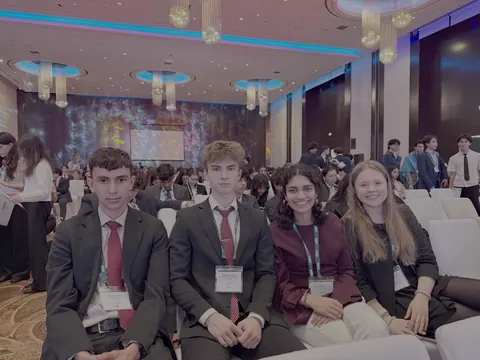
Who can participate
Akademiet MUN 2026 is open to high-school students from any school, in Norway and abroad. No prior experience is required. We expect a mixture of seasoned delegates returning from larger conferences and first-time delegates attending their very first session — the procedural rules and committee design assume both.
Delegates may register individually or as part of a school delegation. We strongly encourage advisors to bring beginners alongside more experienced students; one of the most reliable features of MUN is that the first conference is invariably the hardest, and the second is unrecognisably easier.
What you'll learn
- Research. How to read a country's foreign policy from primary sources — UN voting records, ministry statements, treaties — and translate that into a defensible position.
- Public speaking. How to address a room of strangers in formal language, on a topic you may have learned about a week ago, without notes.
- Negotiation. How to draft language that twenty delegates with different priorities can all sign. This is the hardest skill MUN teaches and the most useful one outside it.
- Rhetoric and procedure. The discipline of speaking in third person, yielding time, raising motions, and respecting the chair — the structure that makes everything else work.
How to prepare
Once you have received your country and committee allocation, three steps will carry you through your first conference comfortably.
- Research your country. Read its constitution or foundational documents, its current government's foreign policy, and its voting history at the UN on similar topics. Build a one-page summary you can refer to in committee.
- Write a position paper. A short document — typically one page — outlining your country's stance on the agenda issue, the causes it identifies, and the solutions it would support. Most chairs ask for these in advance.
- Read the rules of procedure. Akademiet MUN follows a streamlined version of standard MUN rules. Knowing the difference between a moderated and unmoderated caucus, and when to raise a point of order, will spare you the embarrassment of finding out in session.
A note on tone
MUN is a formal exercise. Delegates address each other in third person — "the delegate of France believes…" — and address the chair, never each other directly. The convention can feel odd at first; it stops feeling odd within the first hour. The point is not pageantry. It is to keep debate focused on positions rather than personalities.